
Overseas investors have pulled out a net Rs 1,14,855.97 crore from the Indian markets in the current year so far, amid heightened geopolitical tensions and inflation concerns. Foreign portfolio investors have sold domestic equities worth Rs 48,261.65 crore so far this month, taking the year-to-date tally this year to a massive Rs 114,855.97 crore, according to depositories data. The exodus of foreign investors was largely owing to inflationary pressures and deepening global macroeconomic conditions following the Russia-Ukraine war, experts said.

After three consecutive years of infusing huge funds, foreign portfolio investors retreated from the Indian equity markets in a big way in 2022 with the highest-ever yearly net outflow of nearly Rs 1.21 lakh crore. The huge outflow, which surpasses by a big margin the previous record of Rs 53,000 crore net withdrawal in 2008, came amid aggressive rate hikes by central banks globally but 2023 is expected to be better on positivity about overall macroeconomic trends in India, experts said. Apart from global monetary tightening, volatile crude, rising commodity prices along with Russia and Ukraine conflict led to an exodus of foreign money in 2022.

Ankita is now country's best-ranked singles (182) and doubles (95) player and is set to make her Olympic debut at the Tokyo Games next month.

Equity benchmarks mustered gains for the first time this week on Thursday as investors piled into the recently-battered metal, bank and IT stocks amid expiry of monthly derivative contracts. Snapping its three-session losing streak, the 30-share BSE Sensex rallied 503.27 points or 0.94 per cent to settle at 54,252.53. On similar lines, the broader NSE Nifty gained 144.35 points or 0.90 per cent to end at 16,170.15.
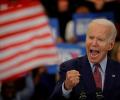
India will have to show more willingness to import, and since Biden will not encourage sale of oil and gas to bridge the gap, it means there has to be more meaningful duty reduction in other areas even if Delhi baulks at a Free Trade Agreement so soon after walking out of RCEP.

Benchmark share indices opened lower on Monday, amid weak global cues, as investors turned cautious ahead of the US Federal Reserve stance on interest rate.

Citing the massive surge in Omicron infections and the resultant impact on overall economic activities in the March quarter, Swiss brokerage UBS Securities has revised downwards its India's growth forecast for the current financial year to 9.1 per cent from 9.5 per cent earlier. However, UBS Securities does not see the third wave impact extending to the next financial year as it has revised upwards its real GDP forecast to 8.2 per cent, up from 7.7 per cent earlier, expecting the real GDP growth to remain well above the historical average. The World Bank pegs it at 8.3 per cent, unchanged from its June assessment, saying the recovery is not broad-based yet.

The impact of the Iraqi war on the US economy cannot be gauged until enough critical data relating to the period since the war's onset is available over the next several weeks, Federal Reserve policymakers said on Monday.

HCL Tech was the top loser in the Sensex pack, shedding around 4 per cent, followed by Infosys, Dr Reddy's, TCS, Reliance Industries, Tech Mahindra and NTPC. NSE Nifty slumped 163.45 points to 14,557.85.

The dollar-rupee rate could move in the opposite direction if dollar policy rates rise and the FPIs sell in December, says Devangshu Datta.

Continuing their massive selling spree for the ninth consecutive month, foreign investors dumped Indian shares worth Rs 50,203 crore in June -- the highest net outflow in over two years -- amid aggressive rate hike by the US Federal Reserve, elevated inflation and relatively higher valuation of domestic equities. Foreign portfolio investors (FPIs) have now pulled out around Rs 2.2 lakh crore from domestic equities in the first six months of 2022 -- the highest-ever net withdrawal by them. Before that, FPIs withdrew Rs 52,987 crore in the entire 2008, data with depositories showed.

n the broader market, BSE Midcap and Smallcap indices are trading higher by 0.3% each.

Domestic equity markets are likely to see volatility in a range-bound trade this week amid geopolitical worries and growing expectations of a sharp hike in interest rates, analysts said. Global trends, inflation data and the last batch of quarterly earnings will drive the markets this week, they said. Besides, the rupee movement, FII investment pattern and Brent crude trends would also be watched by investors.

The BJP leadership knows it can't boast of governance in the state as the Bommai government has little to show. So, the game plan is to project Modi, who will reiterate how important it is for a state to have the same party ruling in power at the Centre, observes Ramesh Menon.

Experts say foreign investor sentiment was bolstered by the US Federal Reserve's decision to go slow with interest rate hikes and hopes of political stability.

The sudden movement of the rupee - post the monetary policy - is not a reason to panic, said currency dealers. According to them, a correction was overdue for the rupee that remained the best performing currency in the region for well over a month. The rupee closed at 74.72 a dollar on Friday from its previous close of 74.60. It had dropped 1.52 per cent against the dollar on April 7 after the Reserve Bank of India (RBI) announced its monetary policy, committing to buy Rs 1 trillion of bonds in the June quarter. A weak rupee goes well with the export narrative of the government, and is consistent with the RBI's intervention strategy that prevented an appreciation.
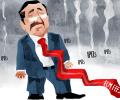
Experts say companies wanting to launch IPOs will have to scale back their expectations given the fall in valuations.

The present happenings in Manipur are the wages of continued neglect, and not so benign at that, of a vital region and its people. Had we lavished on the North East even a fraction of the care and resources we do on Kashmir, things would not have come to this pass, asserts Shreekant Sambrani.

Losers included Bharti Airtel, SBI, Wipro, Vedanta, Maruti Suzuki, ICICI Bank, Axis Bank and Reliance Industries, falling up to 2.18 per cent.

Despite its recent underperformance, gold must be a part of your portfolio.

The speed at which he led the central bank in different areas -- ranging from internal reorganisation to inflation fighting, stabilising the currency, taking on rogue corporations, cleaning up bank balance sheets, and opening the sector -- makes one believe that Rajan knew he had only three years to do his job. A fascinating excerpt from Tamal Bandyopadhyay's MUST-READ Roller Coaster: An Affair with Banking.

The Federal Reserve must now ensure that higher inflation doesn't derail the US recovery.

The report did not specify the impact the rate hike will have on India.

The Congress released a booklet 'Nau saal, Nau sawaal', asking nine questions from Modi. The BJP rejected the Congress' criticism as a 'bundle of lies and mountain of deception' and said the questions are born out of 'pathological hatred' of the PM.

'Slower-than-anticipated recovery can be a bigger risk this time than a liquidity-driven event -- at least for India.'

Devangshu Datta predicts the good, the bad and the ugly of currency trends for the coming year.

Industrial countries cannot at this point wash their hands off developing economises and say we will do what we need to, and you do the adjustment you need to, says RBI Governor.
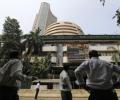
After rallying over 300 points, the 30-share BSE Sensex ended 169.14 points, or 0.42 per cent, higher at 40,581.71. Similarly, the broader NSE Nifty settled 61.65 points, or 0.52 per cent, higher at 11,971.80.

'Avoid going overweight on gold. But maintain a 10 per cent allocation via sovereign gold bonds,' Bajaj Capital MD Sanjiv Bajaj tells Sarbajeet K Sen.
The BSE mid-cap and small-cap indices ended flat against Sensex's 0.4% up-move.

Bajaj Finserv was the top gainer in the Sensex pack, rallying around 7 per cent, followed by Bajaj Finance, HDFC, L&T, ICICI Bank, Sun Pharma and NTPC. On the other hand, Tech Mahindra, ITC and M&M were the laggards.

'It will be best for investors to have a systematic investment plan in mid-cap and small-cap funds with a three-/five-year horizon.'

We have not suffered such huge price shocks across so many basic commodities, at the same time, in decades. Has the inflationary impact of all this been factored into stock prices as yet, asks Debashis Basu.

The markets have been unable to sustain at higher levels as a rise in bond yields globally, especially in the US have dented sentiment. Surging commodity prices, especially crude oil that have now hit $70 a barrel (Brent) coupled with inflation woes and fear of sporadic lockdown across major economic hubs back home as Covid cases rise have chased the bulls away. In the short-term, analysts expect the markets to remain volatile as they react to news flow - both from overseas and developments back home. Investors, they say, need to keep a tab on how the US treasury yields move, which in turn will have a ripple effect on how big money moves across developed (DMs) and emerging markets (EMs), including India.
The 30-share Sensex closed 80 points lower at 21,753 levels while the 50-unit NSE Nifty index was down 38 points at 6486 levels. Benchmarks plunged to their lowest levels since March 06, 2014.
US Federal Reserve Chairper Janet Yellen hinted at raising interest rates sooner than expected, in her first press conference after assuming the top job at US central bank.

The steep decline in commodity prices has reversed.

Markets end in the red, midcaps in focus

While FIIs have pumped in nearly Rs 17,000 crore, MFs have been net buyers to the tune of Rs 9,000 crore.

'I was feeling so suffocated under Yogiji's rule.'
